Morgan Krüger · 10 October 2026
Baltic Sea Research Fuels Student Climate Innovations Across Polish EU Exchange Programs
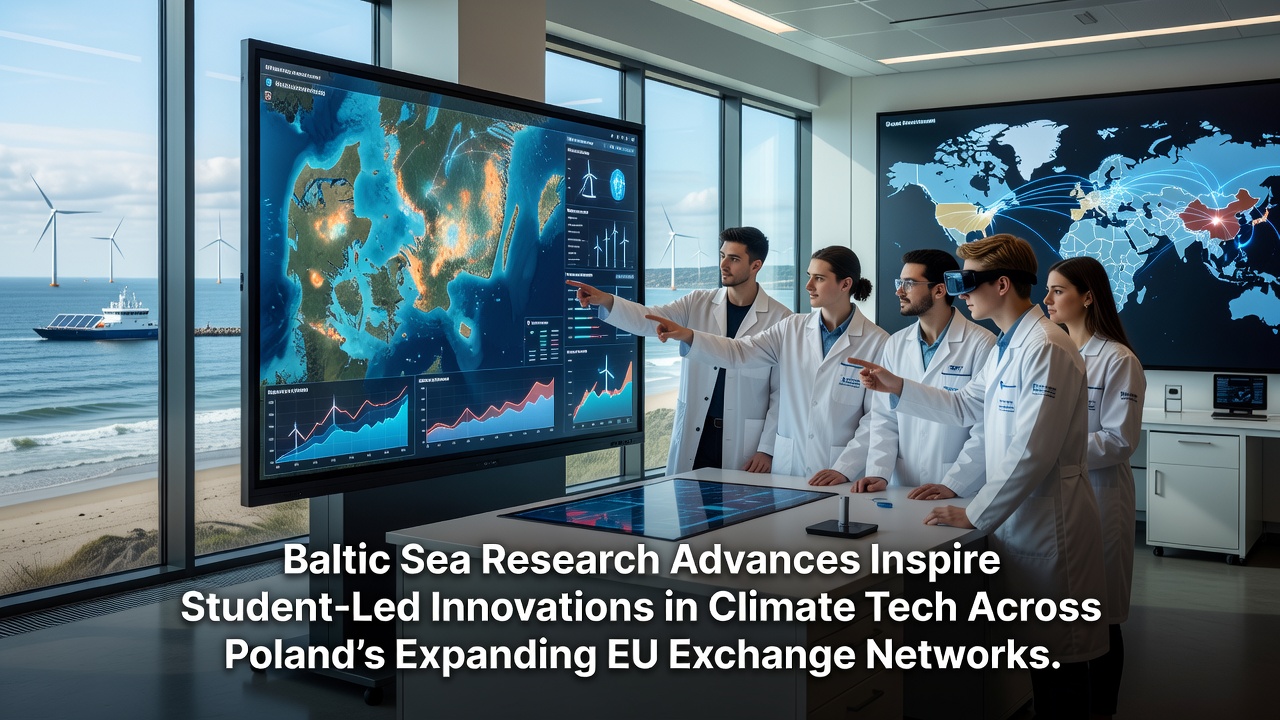
Baltic Sea research has produced detailed data on marine ecosystems, temperature shifts, and pollution patterns that now shape student projects in climate technology throughout Poland. These findings reach Polish universities through established EU exchange networks that connect institutions across member states. Data collected by international teams shows rising sea levels and changing salinity levels that affect coastal communities, and students translate this information into prototypes for monitoring systems and renewable energy solutions.
Key Findings from Baltic Sea Studies
Research teams operating in the Baltic region have documented a 1.5-degree Celsius increase in average surface temperatures since 1990, according to reports from the European Environment Agency. Sediment core samples reveal historical shifts in nutrient loads that correlate with current algal bloom frequency, and these patterns inform models used by engineering students in Warsaw and Gdansk. Observers note that such datasets provide concrete baselines for climate tech applications, including sensors that track oxygen depletion in real time.
Exchange programs funded through EU frameworks allow Polish students to spend semesters at partner labs in Sweden adn Germany, where they access shared equipment for analyzing microplastic distribution. Figures from the Polish Ministry of Science and Higher Education indicate that participation in these networks grew by 22 percent between 2023 and 2025. Students return with technical skills that they apply to local projects addressing similar environmental pressures along the Polish coastline.
Student Projects Emerging from the Data
One group at Gdansk University of Technology developed a low-cost buoy system that measures pH and temperature fluctuations, drawing directly from Baltic Sea monitoring protocols established in 2024. The device transmits readings via satellite links, and initial field tests conducted in October 2026 confirmed accuracy within 0.2 pH units compared wth reference instruments. Another team in Krakow adapted machine-learning algorithms trained on Baltic salinity records to predict flooding risks in inland river basins.
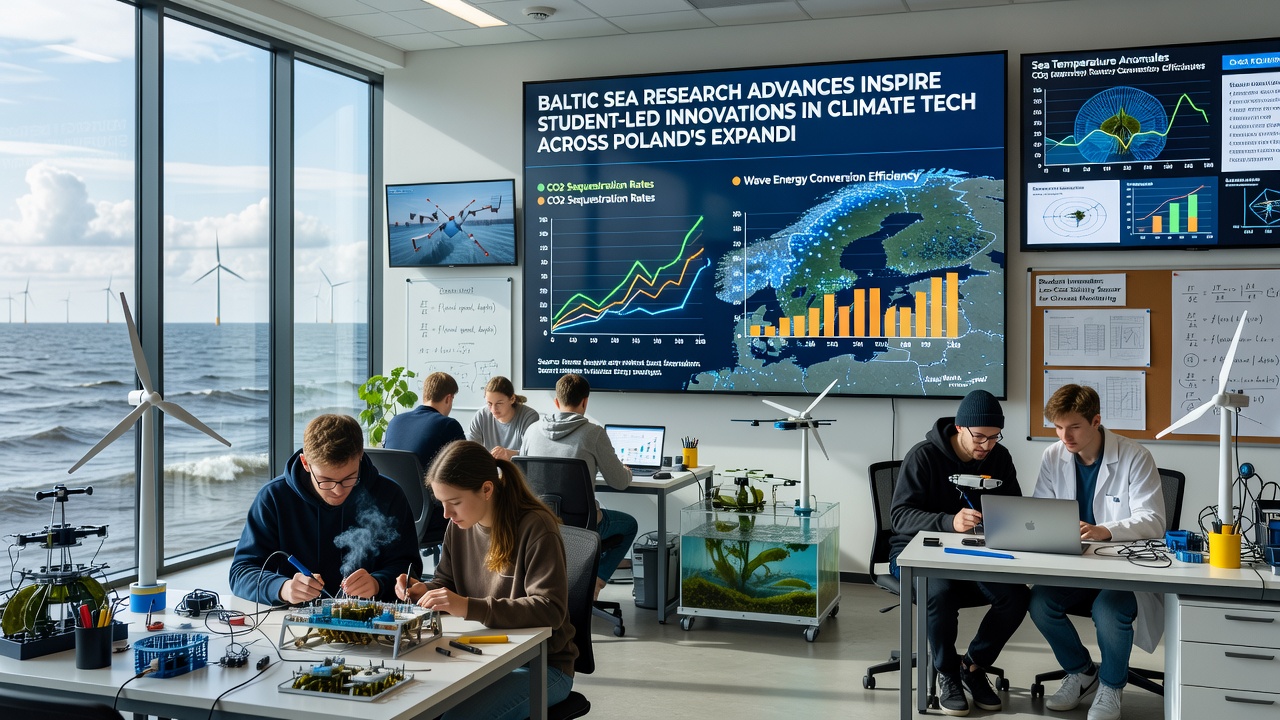
These innovations often start during joint workshops organized through the exchange networks. Participants review raw datasets from Baltic expeditions, then identify variables that translate into hardware or software solutions. Data shows that projects incorporating cross-border measurements achieve faster validation because they build on established methodologies rather than starting from scratch. In one case, a prototype wave-energy converter tested near Hel Peninsula used wave-pattern statistics collected during joint Polish-Danish cruises.
Expansion of EU Exchange Networks
Poland's participation in EU academic mobility schemes has broadened since 2021, with new agreements linking technical universities in Poznan and Wroclaw to research vessels operating in the Baltic. Network coordinators report that over 1,800 Polish students took part in climate-related placements during the 2025-2026 academic year. These placements include access to shared databases maintained by the Helsinki Commission, which tracks pollution reduction targets across the region.
Funding streams from Horizon Europe programs support equipment purchases that remain available after students complete their exchanges. Universities in Poland have installed additional water-quality analyzers and drone platforms that replicate Baltic monitoring setups. This infrastructure allows returning students to continue experiments without needing repeated travel, and it creates continuity between international datasets and local applications.
Integration with National Priorities
Polish government strategies for climate adaptation now reference Baltic Sea findings when setting targets for coastal resilience. Student teams contribute to these efforts by supplying open-source code for data visualization tools that regional authorities use during planning sessions. Records from the 2026 academic cycle show that at least 14 student projects received national innovation grants after demonstrating measurable improvements in sensor durability under Baltic conditions.
Exchange participants also bring back regulatory knowledge about EU directives on marine protection. This knowledge helps align Polish student designs with certification requirements that ease market entry for climate tech products. Collaboration between returning students and faculty results in updated course modules that incorporate recent Baltic observations into engineering curricula.
Conclusion
Baltic Sea research continues to supply verifiable datasets that Polish students convert into climate technology through expanding EU exchange networks. Participation numbers and project outputs indicate sustained activity into late 2026, supported by shared infrastructure and cross-border methodologies. These connections allow direct application of marine observations to practical innovations along Polish coasts and beyond.