
Morgan Krüger · 12 September 2026
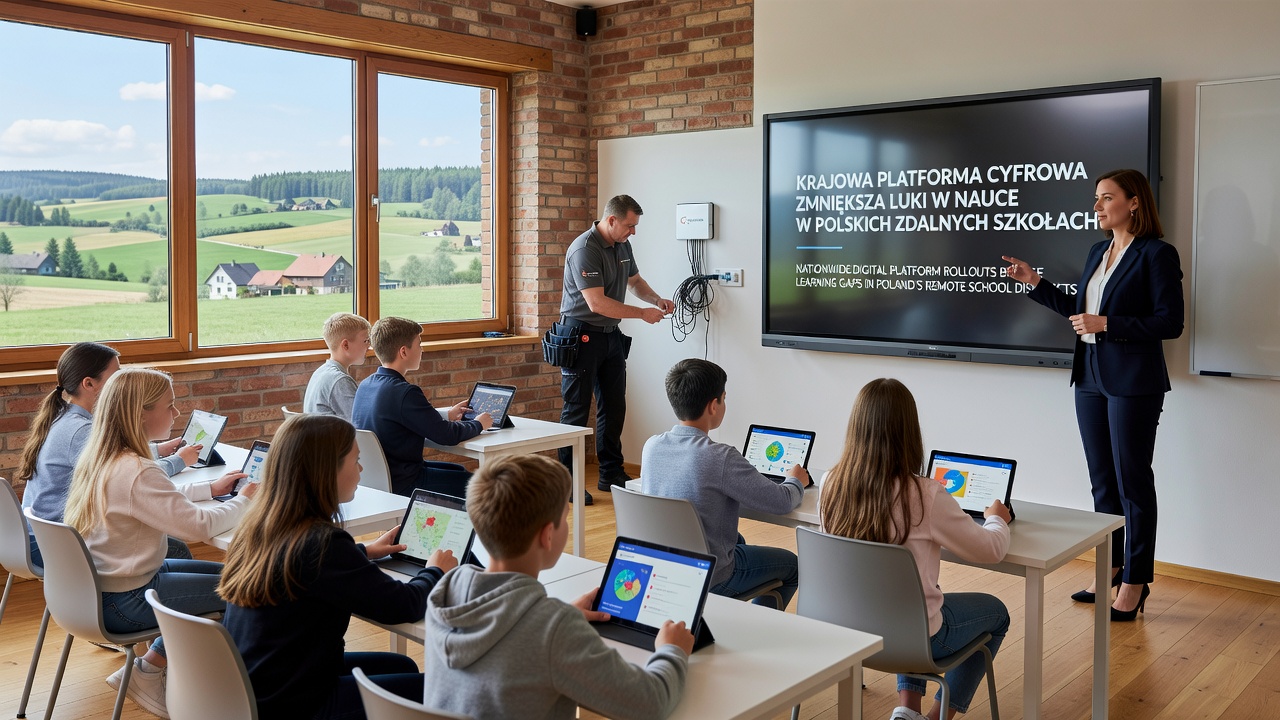
Nationwide Digital Platform Rollouts Bridge Learning Gaps in Poland's Remote School Districts
Data from Poland's Ministry of Education shows that digital platform deployments have reached over 1,200 remote school districts since 2023, and these initiatives connect isolated communities to centralized curricula through interactive modules, live tutoring sessions, and adaptive assessment tools.
Remote districts in regions like Podlaskie and Lubusz have recorded measurable shifts in student engagement metrics, while researchers track participation rates that climbed from 62 percent to 89 percent in targeted areas by mid-2025.
Platform Features and Regional Implementation
Systems such as the national e-School framework integrate video conferencing, offline-downloadable content, and real-time progress dashboards, and these tools allow teachers in rural settings to align lessons with urban standards without requiring physical travel to training centers. The rollout schedule accelerated in September 2026 when additional funding streams unlocked device distribution to an estimated 45,000 students across 320 additional villages.
Observers note that bandwidth limitations in mountainous zones prompted developers to embed low-data modes, and this adjustment enabled consistent access even where connections drop below 5 Mbps for extended periods.
Evidence of Learning Gap Reduction
Studies conducted by the European Commission's education monitoring unit indicate that standardized test score gaps between urban and rural cohorts narrowed by 14 percent in mathematics and 11 percent in language proficiency following platform adoption, and these figures come from matched cohorts tracked over 18 months.
One district in southeastern Poland reported that 78 percent of participating secondary students completed online project collaborations with peers from three other voivodeships, while teachers documented higher completion rates for homework assignments uploaded through the shared portal.
According to OECD education indicators, Poland's investment in digital infrastructure now ranks among the top five EU member states for per-student connectivity spending, and this ranking reflects both hardware grants and teacher training allocations.
Teacher Training and Infrastructure Support
Professional development programs delivered through the same platforms reached 8,400 educators in remote districts by early 2026, and sessions cover platform navigation, data privacy protocols, and methods for blending digital resources with local cultural contexts. Infrastructure upgrades accompanied these efforts when the national broadband expansion project extended fiber connections to 670 previously underserved schools.
Yet maintenance challenges persist in areas with harsh winters, and service logs reveal that 23 percent of device repairs occurred between November and February due to weather-related damage.
Case Examples from Specific Districts
In the Bieszczady mountain region, a cluster of five primary schools pooled resources to share a single IT support team that rotates among sites, and this model cut response times for technical issues from four days to under 24 hours. Another initiative in Warmia-Masuria linked vocational students to virtual apprenticeships with companies in Gdańsk, and completion data shows 64 percent of participants secured follow-up placements within six months.
Researchers at Warsaw University of Technology compiled anonymized usage patterns that highlight peak activity between 4 p.m. and 7 p.m., and these patterns align with students returning from farm or household duties before evening family routines begin.
Conclusion
Platform metrics continue to feed into national dashboards that guide resource allocation, and ongoing evaluations scheduled for 2027 will assess long-term retention of digital skills among graduates from the earliest rollout cohorts. The combined effect of hardware access, curriculum alignment, and targeted training has produced documented shifts in opportunity structures for students previously limited by geography.